A fast feed
X is built around the present moment, so a post is usually seen soon after it goes out or not much at all. That makes timing more important than on networks where posts live for days.
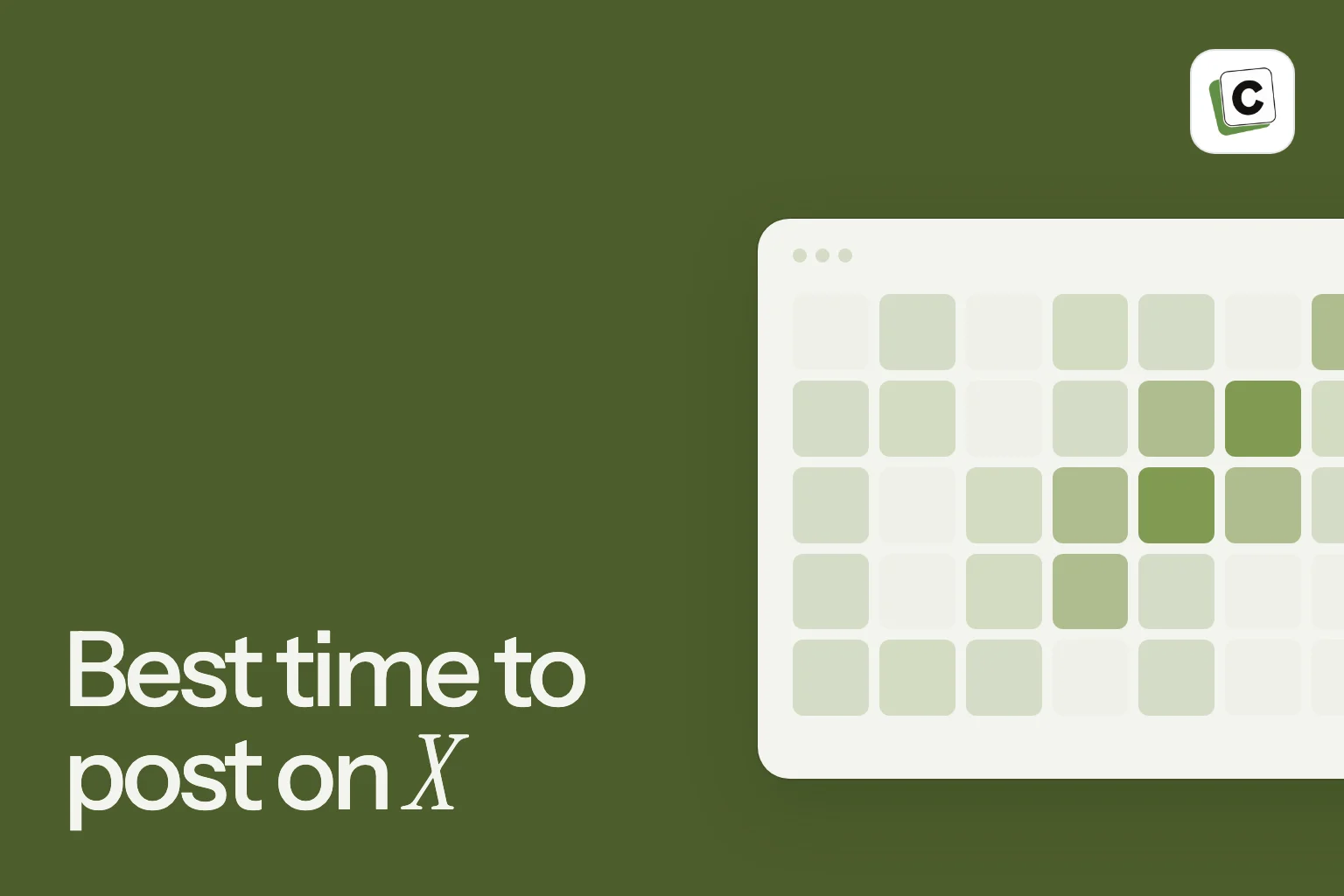
Find when your followers are on
X’s analytics, where available on your account, shows impressions and engagement per post. Compare your own posts by hour and day to see when you get the strongest response.
- Record the time and the result of each post for a few weeks.
- Group by weekday and time block.
- Look for times that win repeatedly.
Match the time to the topic
News and commentary work in the moment. Evergreen tips can go anywhere. Product announcements often do well when your audience’s workday starts. Match the slot to the type of post.
Post more than once
Because a post is short-lived, you can reuse a strong idea in a new form later. Do not repeat the same words, but share it again from another angle at a different hour, and see which time lands.
Let the queue do it
Set your best slots once and queue posts into them. Content Postiz schedules posts, polls and threads of up to 25 posts to X, and your AI can fill the week at once.
Why the first minutes matter more on X
X is built around a stream that moves quickly. A post that goes out when your followers are scrolling can pick up replies and reposts within minutes, and early reactions often decide whether it is shown to more people. The same post an hour later, when your audience has moved on, may barely be seen.
That does not mean you must post live every time. It means that choosing a window when your audience is active, and being around to answer, gives a post its best chance. A scheduler removes the effort of remembering.
Find your windows with a simple log
X’s own analytics shows how each post performed, but the most reliable way to learn your timing is to record it yourself for a few weeks. Keep a sheet with a row for each post.
- The date, the weekday and the hour you posted, in the time zone of most of your audience.
- The type of post: plain text, image, video, poll, thread or a post with a link.
- Impressions after a day.
- Replies, reposts and likes after a day.
- Profile visits or new followers, if you can see them.
Think about when your audience is on the app
People use X in short bursts: first thing in the morning, during breaks, over lunch and in the evening. Developers, journalists, marketers and founders all keep different rhythms. If your audience is in one profession, picture their day and choose a few windows to test.
Do not forget time zones. A post that suits one region’s lunchtime may land in the middle of the night elsewhere. If your followers are spread out, post an idea at different times across the week, changing the wording each time.
Different kinds of post, different windows
Not all posts should go out at the same time.
- Quick takes and news reactions belong in the moment, so speed beats a perfect slot.
- Threads take longer to read, so they suit a window when people have a minute, such as early morning or evening.
- Polls need people to respond while the poll is fresh, so post when you can check back.
- Announcements should follow the event, whatever the clock says.
- Evergreen tips can be posted again in a new form at a different time.
A worked example
A solo developer posts short tips about their tool. They choose three windows to test over three weeks: early morning, lunchtime and early evening, all on weekdays. They post similar tips in each window and record impressions and replies.
At the end, lunchtime tips get the most impressions, but early evening tips get more replies from other developers. Because their goal is conversation and feedback, they move their main tips to early evening and use lunchtime for links to their blog.
The lesson is to match the window to the goal. The best time is the one that gets the result you want, not just the biggest number.
Be there when the replies arrive
Replies are the most useful reaction on X, because they start conversations and signal that a post is worth showing. When you schedule a post, plan to be at your screen for the first fifteen minutes. Answer every reply, ask a follow-up question and thank people who share your post.
If you cannot be there, move the post to a time when you can. A good post with a quick, friendly author beats a better time with no one home.
Mistakes to avoid
- Following a generic “best time” list without checking your own results.
- Posting the same text at several times in a row.
- Changing your schedule every few days, so you never learn anything.
- Judging a window by one post.
- Ignoring time zones when your audience is international.
How to read your results without fooling yourself
A single post can do well or badly for reasons that have nothing to do with the hour. It might touch on a trending topic, get reposted by a larger account or be buried by a news event. If you judge a time slot from one post, you will often learn the wrong lesson.
To avoid that, compare averages across several posts in each window, and use the middle result rather than the best one. If one viral post sits among five average ones, the average tells you more about the slot than the viral post does. Also compare like with like: a thread should be judged against other threads, and a plain text post against other text posts.
Finally, ask whether the difference is large enough to matter. If your best window averages only slightly more than your second best, either is fine, and you can choose the one that fits your day.
Seasons, events and the news cycle
X reacts to the world more than most networks. A major news event, a big sports match, a product launch from a large company or an outage can change who is on the app and what they want to read. On those days, your usual window may not behave as usual.
When something big is happening, decide whether your post fits the moment or whether it is better to wait. A light promotional post can look tone-deaf next to serious news. On the other hand, a thoughtful post that connects to the event can reach a bigger audience than usual.
Over the year, notice patterns around holidays, the start and end of the school term, and busy seasons in your field. Write them in your log, so that next year you know what to expect.
Posting frequency and spacing
If you post several times a day, space your posts out. Two posts a few minutes apart compete with each other for the same audience. Leave an hour or two between them, so that each has time to collect replies before the next arrives.
Use your windows to decide where to place them. For example, you might schedule one post for a morning window, one for lunchtime and one for the evening. Keep the content varied across the day, so that someone who sees all three does not feel they are repeating themselves.
Ask your AI to review the log
Once you have a few weeks of rows, you can paste the sheet into your AI app and ask which windows looked strongest, how big the differences were and what to test next. A careful assistant will tell you when the data is too thin to trust, and will suggest a simple experiment.
Treat the answer as a second opinion rather than a verdict. You know your audience, and the numbers are small. When you are happy with the plan, set your best windows as posting slots in Content Postiz and ask your AI to fill the week.
Keep a bank of posts for the slots you cannot fill
Some days there is nothing to say. Rather than skipping a slot or posting something rushed, keep a small bank of evergreen posts: a favourite tip, a link to your best article, a question you can ask again in a new form. When a gap appears, drop one in.
Refresh the bank every few weeks, so that it does not feel stale to people who follow you closely.
Frequently asked questions
How often should I post on X?
Many people post a few times a day, but the right number is the one you can keep up with while staying useful.
Is it worth posting at weekends?
It can be, especially for audiences that work irregular hours. Test a few weekends and compare.
Can I schedule posts on X?
Yes. Content Postiz schedules posts, polls and threads of up to 25 posts, and your AI can fill the week for you.
What if my results are the same at every time?
Then timing is not your main lever. Work on the first line, the format and the topic.