A working-hours network
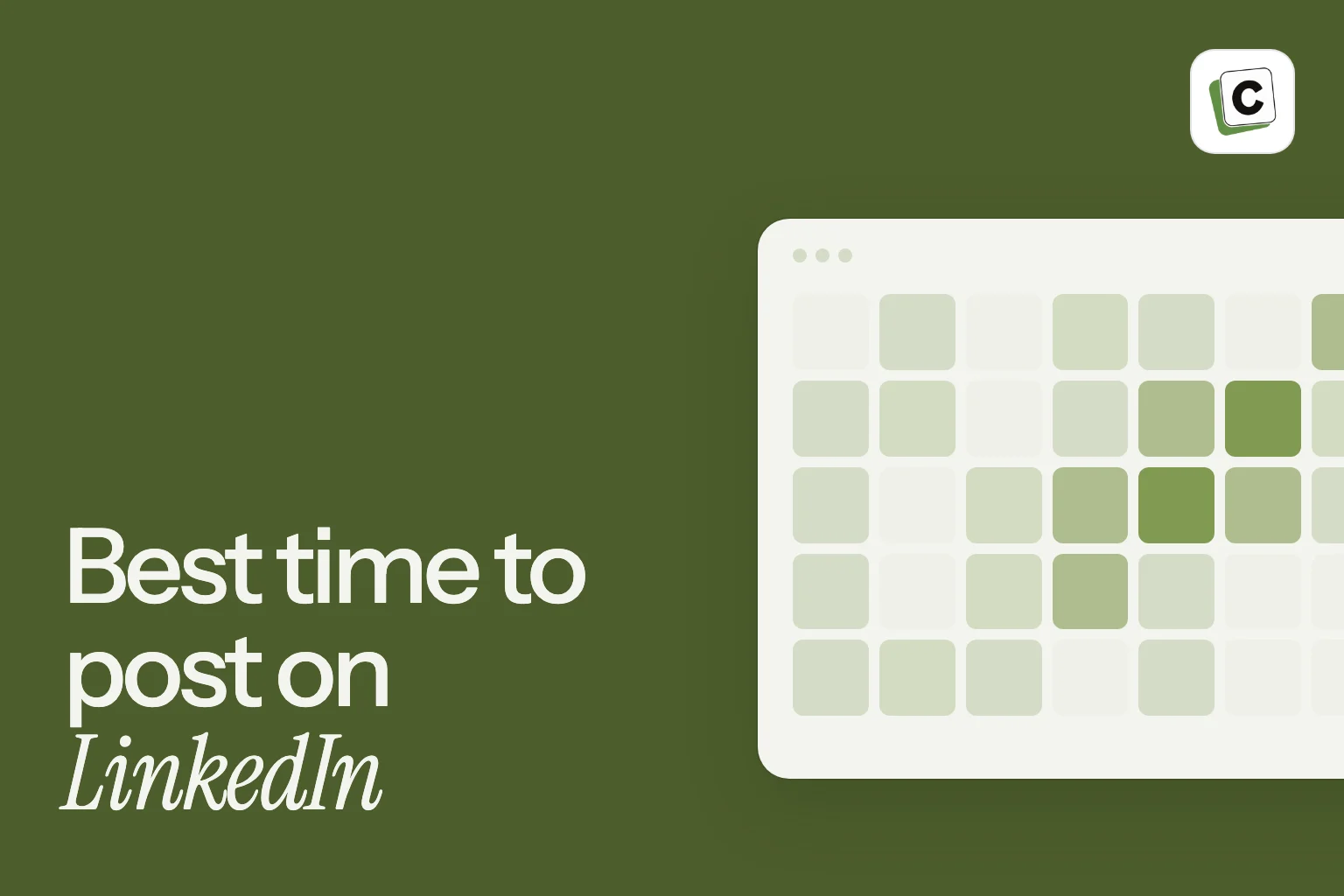
People use LinkedIn around their workday: before it starts, between tasks and in the afternoon. That is why advice usually centres on weekdays. The best hour still depends on who you are trying to reach. A founder audience, a recruiter audience and a nurse audience keep different hours.
Find your own pattern
LinkedIn’s analytics shows how a post performed but gives little about the time of day. The simple way to learn is to record it yourself.
- Note the day and hour of every post for a month.
- Record impressions and comments for each.
- Group by weekday and by morning, midday or afternoon.
- Look for a window that wins more than once, not a single lucky post.
Think about your reader’s day
If your readers are decision-makers in busy roles, a mid-morning or late-afternoon post may catch a pause. If they scroll over breakfast or commute, early may be better. Write down your guess, then test it.
Do not chase a golden hour
People talk about a first-hour window where early engagement decides a post’s reach. LinkedIn has not confirmed a fixed rule. What does help is being around to reply when comments come in, so post when you can.
Set slots and stick to them
Choose two or three weekly slots and queue posts into them. With Content Postiz, you can publish to profiles and Pages, add a first comment from the same author, and let the queue place each post in the next free slot.
A recording sheet you can copy
You do not need special software to learn your timing. A simple sheet with a few columns is enough. Add a row for every post.
- Date and weekday.
- Hour you published, in the time zone of most of your audience.
- Format: text, image, video, document carousel, poll or newsletter.
- Topic in two or three words.
- Impressions after three days.
- Comments and reactions after three days.
- Clicks, if the post had a link.
Weekday by weekday, as hypotheses to test
Many people have theories about each weekday. Treat them as guesses to check against your own sheet, not as rules.
- Monday: people are catching up and planning, so practical and planning-oriented posts may land well.
- Tuesday to Thursday: the heart of the working week, and often when business audiences are most attentive.
- Friday: a lighter mood. Reflective or personal posts sometimes suit it.
- Weekends: smaller, quieter audiences. Worth testing if your readers are founders or freelancers who work irregular hours.
Different formats, different timing
The best slot can change with what you post.
- Text posts: short and quick to read, they suit gaps in the day.
- Document carousels: people tend to settle in for these, so a calmer part of the day may suit them.
- Video: needs attention and often sound, so think about when your audience can watch.
- Polls: they gather answers while they are fresh, so post when you can check in.
- Newsletters: subscribers are notified when you publish, so choose a time you would like to be read.
If your audience is spread across time zones
A morning post in one region lands in the evening of another. Decide which region matters most for each post. For a global audience, you can publish an idea once in the afternoon of one region, and share a fresh angle on it the next morning for another.
Do not post the same text twice at different times. Change the opening, the example or the format, so it feels new.
A worked example
A founder of a small software company wants to reach other founders. They choose three windows to test: weekday early mornings, weekday lunchtimes and weekday late afternoons. For a month they post a similar mix of short text posts and carousels in each.
When they review the sheet, late-afternoon posts collect noticeably more comments, while morning posts collect slightly more impressions. Because their goal is conversation with other founders, they make late afternoon their main window and keep mornings for quick tips.
The result is not a universal rule. It is a decision based on their own audience and their own goal, and they will test again in a few months.
What to do when the results are close
Often two windows perform almost the same. That is useful information: it means you can choose the one that suits your schedule. Pick the one you can reliably be present for, since replying to early comments matters more than a small difference in reach.
Make replies part of the plan
The time you post is also the time you need to be around. Block ten minutes after each scheduled post to reply to comments and to leave a few comments on other people’s posts. This keeps a post alive in the hours when it is most likely to be seen.
Use LinkedIn’s own analytics next to your sheet
LinkedIn’s analytics shows impressions, reactions, comments and reposts for each post, and how your audience breaks down by job title, industry and location. The audience breakdown helps you guess when they work.
If most of your followers are in one industry, think about that industry’s rhythm. A hospital audience, a retail audience and a software audience keep very different hours. Use the breakdown to choose which windows to test first, then let your own results decide.
Watch the calendar
Business attention moves with the year. The weeks before holidays, the end of a quarter, big conferences and school breaks can all change when and how much your audience reads.
When something like that is coming, expect numbers to move and do not read too much into one week. Compare the same period year to year where you can, not just week to week.
Timing and frequency interact
Posting more often gives you more data, but only if each post is good. If you move from two posts a week to five, your best window may be shared between more posts, and the weaker slots will show up more clearly.
Change one thing at a time. If you change both the time and how often you post, you will not know which one caused the difference.
Share what you learn with your team
If several people post for your company, put your findings in one short note that everyone can see: the two best windows, the formats that did well in each and the things you will test next. Without it, everyone keeps guessing separately.
Update the note after each monthly review, and date each entry so people know how fresh it is.
Ask your AI to read your sheet
Once you have a month of rows, paste the sheet into your AI app and ask which windows looked strongest, how big the gaps were and what to test next. A good assistant will also point out when the data is too thin to draw a conclusion.
Use the answer as a second opinion. Then put the winning windows into your Content Postiz slots and have your AI fill them for the coming weeks.
A month-long testing calendar
If you want a plan you can follow without thinking, use this four-week pattern. It tests two windows against each other while keeping everything else steady.
In weeks one and three, post your usual content in window A on Tuesday, Wednesday and Thursday. In weeks two and four, post the same kinds of content in window B on the same days. Keep the formats balanced, so each window gets a similar mix of text posts and carousels.
At the end of the month, you have two weeks of data for each window, with the same weekdays and a similar mix. That is enough to see a clear winner, or to learn that the difference is too small to matter. Either answer is useful.
Signs that a window is working
A winning window shows up in more than one place. Impressions are higher, but so are comments and the number of people who visit your profile afterwards. If only one number is better, be cautious, since it may be a fluke.
Look too at the quality of the response. Thoughtful comments from the kind of people you want to reach are worth more than a pile of quick reactions.
Frequently asked questions
What is the worst time to post on LinkedIn?
There is no single worst time, but posting when your audience is clearly offline gives a post a slower start. Check your own results.
Is it worth posting on weekends?
It can be if your audience is founders, freelancers or people who work irregular hours. Test it for a few weekends.
Does the time matter for company Pages?
Yes, but Page posts often depend more on whether people share them, so ask your team to react or share soon after you publish.
How often should I post?
Choose a rhythm you can keep. Two to four posts a week works well for many people, and consistency matters more than volume.
Can I schedule posts for the best time automatically?
Yes. Set your slots once in Content Postiz and the queue places each post into the next free one.